Identify the task
Decide whether you need a quick model from an image or prompt, or a broader workspace for refining, organizing, and presenting several assets.
Capability guide
Understand what the focused 3D AI Studio entry point does, how it differs from the general workspace, and where its practical limits appear before you begin.
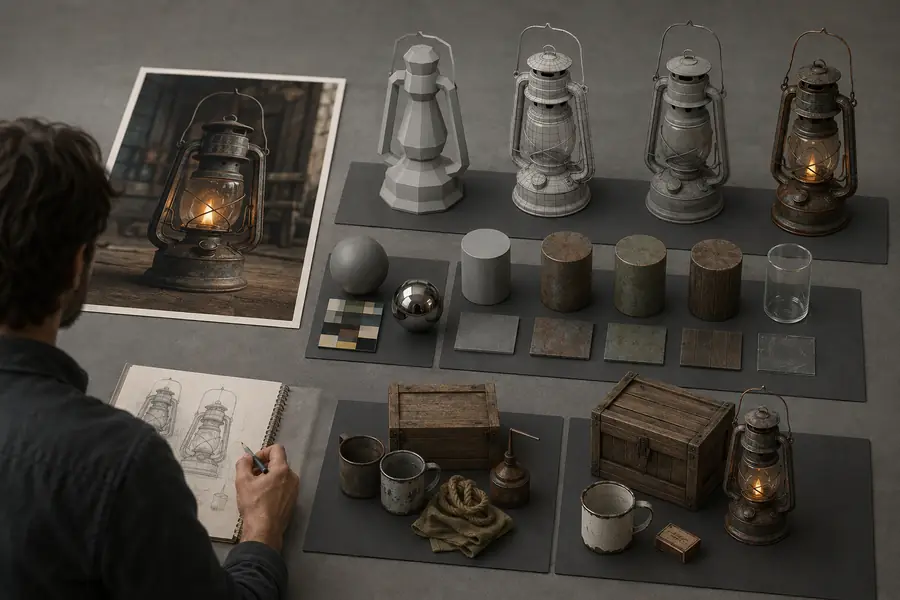
Start with the right surface
The 3D AI Studio pricing question is easier to understand when you compare the focused entry point with the broader creative workspace.
Decide whether you need a quick model from an image or prompt, or a broader workspace for refining, organizing, and presenting several assets.
Use the focused entry point when one clear input should become one usable 3D result without extra setup or project management.
When the first result needs more control, continue in the general 3D AI Studio workflow for adjustments, variations, and export preparation.
Who benefits most
This 3D AI Studio pricing view is most useful for people who value a direct path from an idea to a first 3D asset.
You need a creature, prop, or environment concept from a short description before blocking out a playable scene.
A fast first asset gives you something concrete to test, revise, and place in your prototype.
free text to 3d aiYou have a reference image for a rough object and want a spatial starting point for concept review.
The generated model helps communicate shape and proportion before detailed modeling begins.
image to 3d model freeYou are practicing prompts and want to see how different descriptions become forms without opening a complex toolchain.
Short experiments make it easier to learn prompt structure, silhouette, and iteration.
3d ai studio examples for beginnersYou want to explore a small figurine or decorative object before checking topology, scale, and printability yourself.
The first model works as a visual draft that can be cleaned up for a real-world output.
best ai 3d model generator for 3d printingRelated paths
Choose the workflow that matches your input, then use the focused 3D AI Studio path to create a first result before deciding whether deeper refinement is needed.
Capability split
The following comparison keeps 3D AI Studio pricing separate from capability assumptions: the focused path is direct, while the general path is broader.
Focused entry point
Create a quick first 3D asset from one clear idea or reference.
General 3D AI Studio workflow
Develop, refine, organize, and prepare multiple 3D assets.
Focused entry point
A concise prompt or a single strong reference image.
General 3D AI Studio workflow
Prompts, references, iterations, and project-level decisions.
Focused entry point
Optimized for a short path with minimal setup.
General 3D AI Studio workflow
May take longer because it supports more creative decisions.
Focused entry point
Useful for evaluating the initial shape and direction.
General 3D AI Studio workflow
Better suited to repeated edits, variations, and cleanup.
Focused entry point
Keeps attention on the immediate generation task.
General 3D AI Studio workflow
Provides a more suitable context for managing related assets.
Focused entry point
A starting model for review, iteration, or downstream work.
General 3D AI Studio workflow
A more developed asset pipeline with additional preparation steps.
Focused entry point
Someone testing an idea or needing one asset quickly.
General 3D AI Studio workflow
A creator building a continuing 3D production workflow.
Focused entry point
It is not a replacement for every modeling and finishing task.
General 3D AI Studio workflow
Its broader surface can feel unnecessary for a single quick test.
Output reality
A generated result is a beginning, not a promise that every asset is production-ready without review.
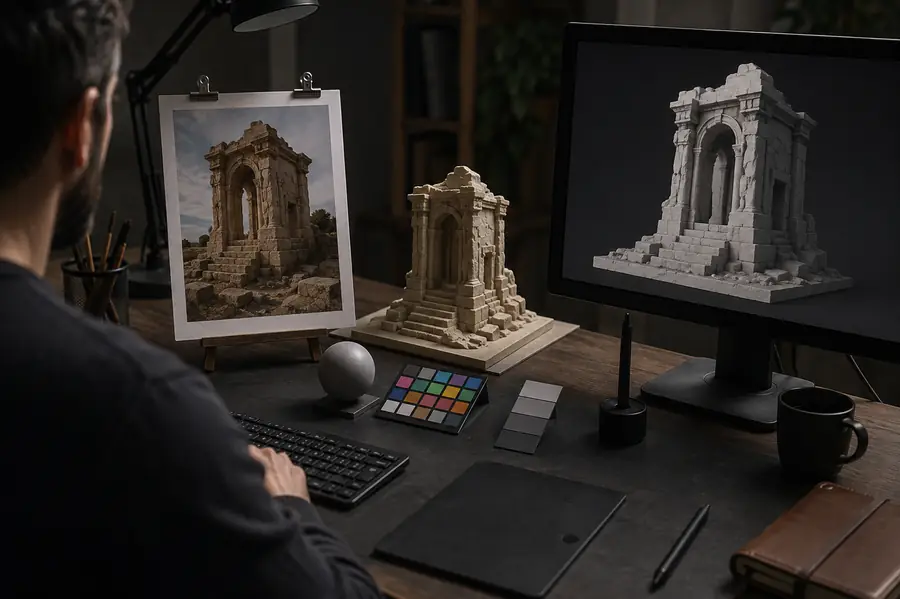

The focused path is strongest when you treat the first model as a fast visual decision tool. Check proportions, topology, materials, scale, and intended use before relying on the asset in a final scene, game, or physical print.
Common questions
These answers focus on what people usually want to know before choosing the focused entry point.
The available cost depends on the specific access path and capabilities being used, so a single number should not be assumed from the tool name alone. Review the current entry experience for the clearest indication of what is available before starting.
A free starting path may be available for trying the workflow and understanding the first generated result. Availability and limits can change, so check the current experience rather than relying on an old comparison or forum comment.
It is designed around a direct generation task: provide a clear prompt or reference, receive a first 3D result, and evaluate its usefulness. More involved editing, organization, and production preparation may require the broader workflow.
Practical limits can include the complexity of the input, the quality of the reference, generation speed, model detail, and how much cleanup the result needs. Treat each output as a draft until it has been checked against its intended use.
Capability is an important part of understanding the available access because a focused generator and a broader creative workspace serve different needs. Compare the actual workflow, output expectations, and limits instead of comparing labels alone.