1
Primary input
Written prompt
Words describing object, style, and use
Generated 3D model
Interpreted geometry and materials
Prompt to model
Free text to 3d ai generation turns a written idea into a visual 3D starting point. Describe the object, style, materials, and camera view, then inspect the generated model before using it in a larger workflow.
At a glance
Text-to-3D conversion begins with language rather than a reference image. The input is flexible, but the output depends heavily on how specifically the prompt describes shape and intent.
A prompt carries meaning, not complete geometry. This comparison shows where a written description is strong and where visual review remains essential.
Written prompt
Words describing object, style, and use
Generated 3D model
Interpreted geometry and materials
Written prompt
Depends on measurements and spatial wording
Generated 3D model
May simplify small or hidden features
Written prompt
Can request roughness, color, or finish
Generated 3D model
May produce approximate textures
Written prompt
Can describe a grouped scene
Generated 3D model
May merge parts or add unexpected elements
Written prompt
Must be stated when important
Generated 3D model
Needs inspection around the full model
Written prompt
Usually not specified by natural language
Generated 3D model
May need cleanup for animation or games
Written prompt
Easy to revise by changing words
Generated 3D model
Requires visual comparison after each pass
Written prompt
Early concepts and style exploration
Generated 3D model
A base for refinement, export, or presentation
Use the preview as a checkpoint, not as proof that every instruction was understood. A good prompt can still produce an uneven underside, fused accessories, or a different silhouette.
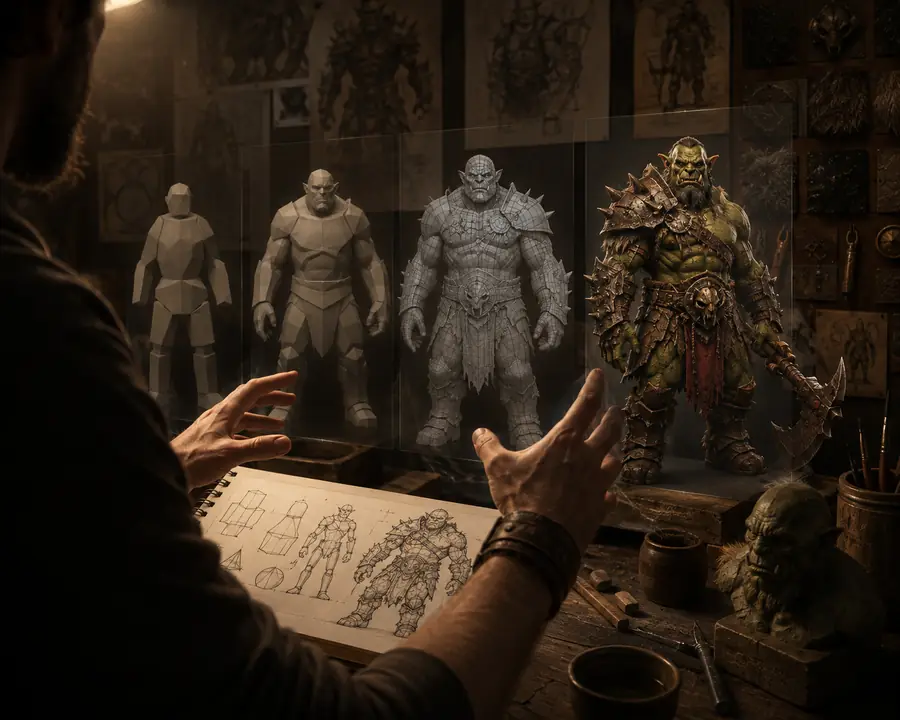
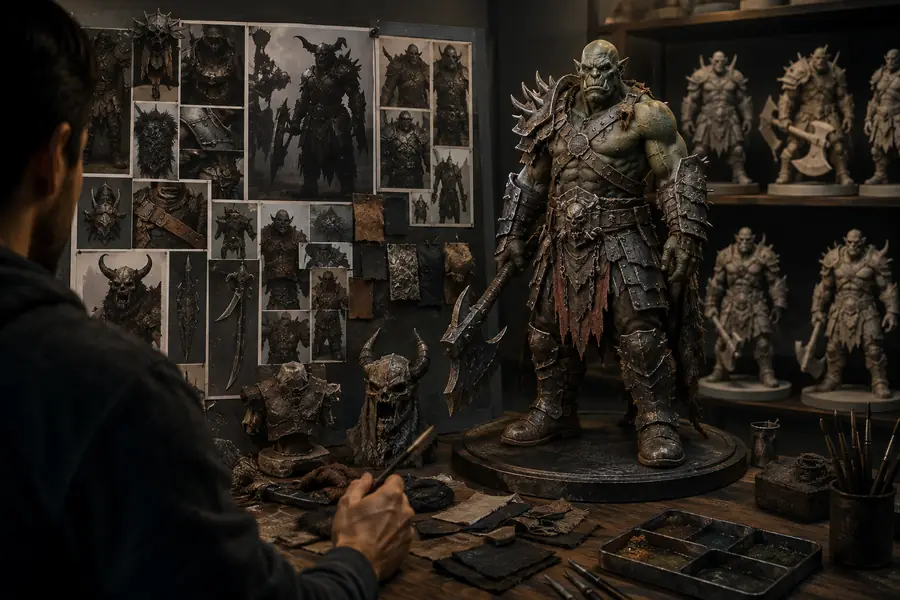
Different creators use text-to-3D for different reasons. These starting points keep the prompt focused while connecting naturally to image-based workflows when a visual reference is available.
Describe a creature, prop, or environment before committing to a detailed sculpt.
Get a fast silhouette and style direction for a blockout.
image to 3d model freeTurn a gameplay idea into a rough prop with materials and proportions stated in one prompt.
Test visual fit early and identify assets that need manual modeling.
ai-generated 3d models from imageExplore unusual forms by naming dimensions, finishes, edges, and intended function.
Create several visual directions before preparing a production-ready design.
image to 3d model freePractice prompt structure with simple objects such as a low-poly chair, lantern, or stylized helmet.
Learn how wording affects geometry without starting from a blank viewport.
ai-generated 3d models from imageEstimate the time saved when you use generated models for early exploration rather than building every first draft manually. The result is a planning aid, not a production guarantee.
Keep verification simple: rotate the result, inspect the underside, check separate parts, and confirm the style matches the prompt. For a guided workflow, see the related pages below.
Answers for common questions about generating 3D models from written descriptions.
It is a workflow that interprets a written description and creates a 3D model or concept from it. The prompt can describe an object, style, materials, proportions, and scene context, but the result should still be reviewed visually.
Start with the main object, then add its shape, materials, style, proportions, and intended viewpoint. Specific nouns and measurable relationships usually produce more useful results than broad phrases such as “make it impressive.”
They can be useful starting assets, but direct use depends on topology, scale, dimensions, materials, and export requirements. Inspect and clean the model before sending it to a game engine, animation package, or 3D printer.
Natural language leaves room for interpretation, and the system may simplify hidden areas or merge closely related parts. Revise the prompt with clearer shape relationships, object separation, symmetry, and negative instructions, then compare another generation.