Required
A clear subject description or visual reference
Specific shape, style, proportions, and intended use produce more useful results.
This 3d ai studio review reddit focuses on the working experience: what the tool replaces, where it helps, and where human 3D judgment still matters. Use the checklist and comparison below to decide whether it fits your project.
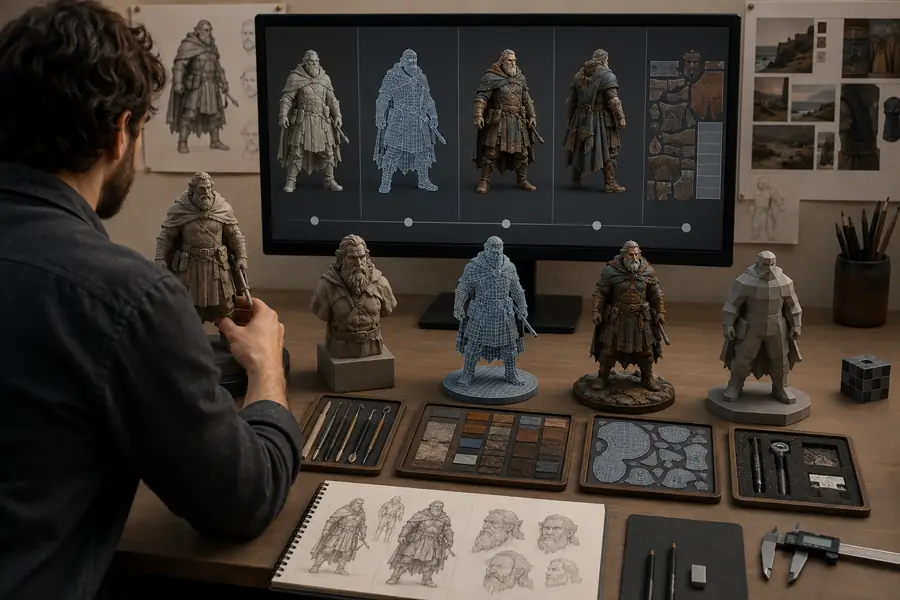
Before a 3d ai studio workflow, most people assembled references, blocked out a form manually, and waited through several rounds of modeling before they could judge the idea.
Specific shape, style, proportions, and intended use produce more useful results.
Choose concept exploration, a game prop, a scene placeholder, or another clear outcome.
A browser preview is enough for an initial pass; detailed production work may need a DCC tool.
Optional for experimentation, but valuable when the model must animate, print, or ship.
Turnarounds, orthographic views, and material notes improve consistency but are not essential to begin.
A 3d ai studio compresses the first modeling loop into a guided sequence. The speed matters most when you need to compare directions before investing in detailed production work.
Start with a concise text brief or an image that communicates the silhouette, subject, and visual direction. Avoid mixing several unrelated ideas in the first request.
Review the shape, proportions, surfaces, and visible defects in the preview. Treat the first output as a draft rather than a finished asset.
Adjust the brief, generate another pass, or export the strongest version for cleanup in your normal 3D workflow. Keep the version that best serves the project.
The main change is not that AI removes every difficult 3D task. It changes when you can see a plausible object, making early decisions cheaper and easier to discuss.
A generated mesh may contain uneven density, hidden intersections, stretched polygons, or topology that is unsuitable for deformation.
WorkaroundRetopologize, remesh, or rebuild critical areas before rigging, simulation, or close-up animation.
A short prompt rarely captures exact dimensions, manufacturing tolerances, attachment points, or a studio's style guide.
WorkaroundSupply measured references and treat the output as a concept until the constraints are checked manually.
Materials, lighting, UVs, and texture continuity may need substantial revision even when the silhouette looks convincing.
WorkaroundUse the model as a base and finish shading, UV work, and texture checks in a dedicated pipeline.
Ambiguous prompts or inconsistent references can produce changes that look different without moving the design forward.
WorkaroundChange one variable at a time and compare versions against a written brief.
The strongest fit is for people who switched from spending their first hours on blank-scene setup to testing several visual directions quickly. These related pages cover adjacent decisions.
The format developed through several overlapping changes in creative software: faster previews, accessible generation, and a growing expectation that tools should help with exploration as well as execution.
Artists gathered images, built a rough form, and iterated by hand. The process offered control but made early experimentation slow.
Image-based systems made it possible to move from a reference toward a rough 3D object, though results often needed heavy cleanup.
Text-to-3D workflows let creators explore objects that did not yet have a finished reference sheet or established design.
A 3d ai studio is most useful as an early-stage accelerator: generate, inspect, compare, then refine with normal modeling tools.
Teams increasingly judge tools by editability, export usefulness, consistency, and time saved rather than by a single impressive preview.
A good 3d ai studio review should end with a decision rule. The right choice depends less on novelty than on how much control and repeatability your deliverable requires.
1
Generate several props, creatures, environments, or shape directions before committing to a final design.
The value is rapid comparison. It helps artists and non-artists discuss form while the cost of changing direction is still low.
2
Build the asset manually when exact topology, dimensions, deformation, or art-direction continuity is non-negotiable.
Direct control is usually more important than speed for hero assets, manufactured parts, and animation-ready characters.
3
Generate a starting point, select the strongest version, and finish it in a production tool.
This preserves the exploration advantage while keeping final responsibility with an artist who can correct structure and detail.
The before-and-after is best understood as a change in decision timing, not a promise that every generated model is ready to ship.
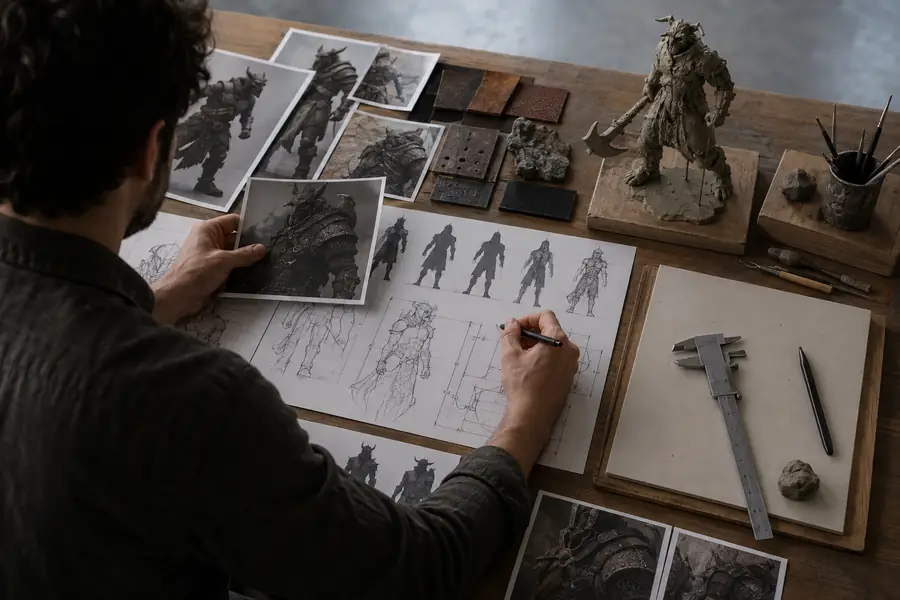
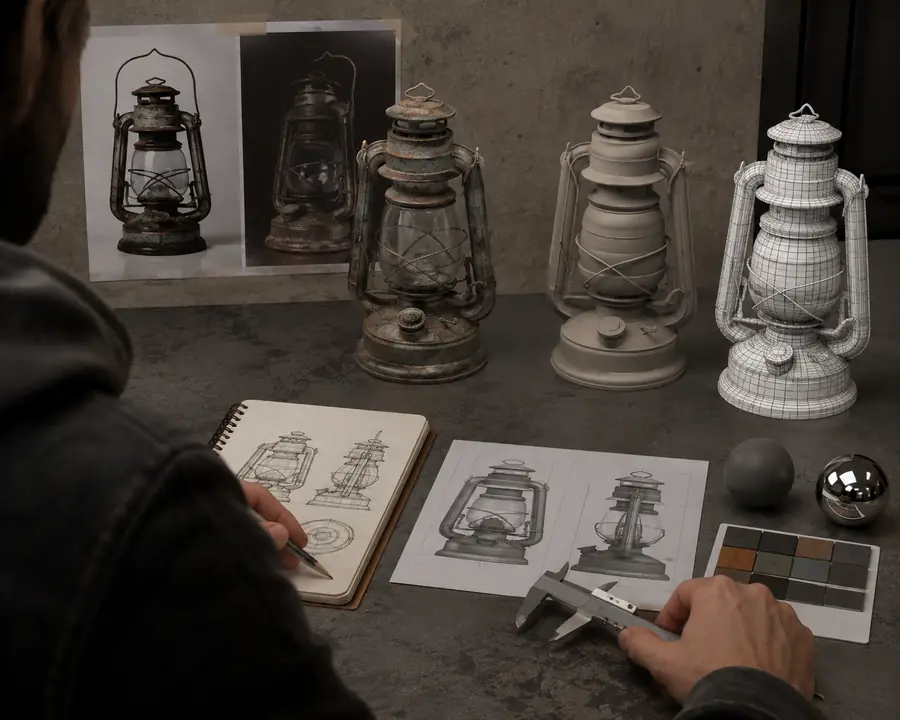
A useful result gives you something concrete to inspect, reject, or refine. It does not remove the need for topology checks, scale checks, cleanup, or final art direction.
These answers address the questions people commonly attach to a 3d ai studio review reddit search.
Look for details about the full workflow rather than a single showcase image. Useful discussions mention input quality, iteration speed, export behavior, mesh cleanup, consistency, and the type of project the reviewer tested.
No. Reddit comments can reveal practical frustrations and successes, but they are usually based on different prompts, expectations, and project requirements. Treat them as signals, then test the workflow with a small asset of your own.
It generally does not replace the judgment needed for modeling, topology, materials, rigging, or art direction. It can reduce the time required to explore ideas and create a rough starting point, especially before detailed production begins.
It is well suited to concept exploration, placeholders, game-prop ideation, visual pitches, educational exercises, and early environment studies. Exact manufactured parts, hero assets, and deformation-heavy characters usually need a more controlled workflow.
Use a focused prompt or a clean reference, describe the intended style and use, and change one variable per iteration. Inspect the mesh before export and plan for manual cleanup whenever the asset will be printed, animated, or used close to camera.