Required
AI-generated models are automatically safe for any project.
Treat every output as an unverified draft until you inspect geometry, textures, licenses, and intended use.
Trust checklist
Searching is 3d ai studio safe reddit usually means you want a practical answer, not a vague promise. 3d ai studio can be useful for creating 3D drafts, but safe use depends on what you upload, how you review outputs, and where you use the files.
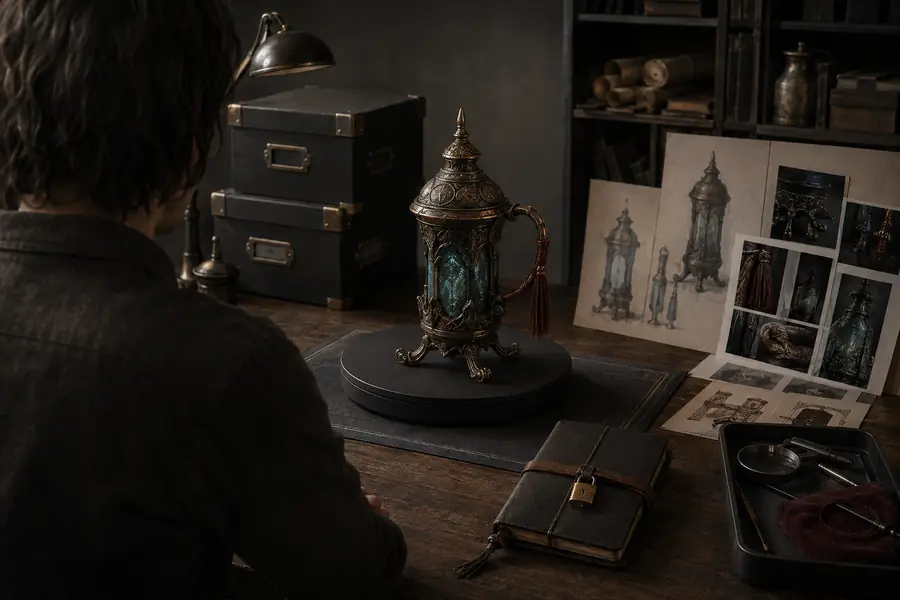
Safety discussions often mix the tool, the generated file, and the user’s workflow. Separating those ideas makes the real risks easier to manage.
Treat every output as an unverified draft until you inspect geometry, textures, licenses, and intended use.
Prompts can contain confidential product details, unreleased characters, or identifying project information.
Visual quality does not prove clean topology, watertight geometry, correct scale, or commercial permission.
Free access changes the cost, not the responsibility to protect inputs and validate outputs.
3d ai studio is best understood as a generative creation layer: it turns a prompt, image, or creative direction into a starting 3D asset. The workflow still needs a person to judge whether the result is accurate, usable, and appropriate.
Creators shaped a rough asset from primitives, references, or a digital sculpt before refining the design.
Single images began guiding rough 3D reconstruction, while users learned to expect missing backsides and imperfect proportions.
3d ai studio-style workflows can produce a useful starting point quickly, especially for concepts, prototypes, and visual exploration.
The generated asset is checked in a modeling, game, animation, or fabrication tool before it becomes part of a real project.
No 3D generator can guarantee safety, ownership, or technical correctness from appearance alone. These limits are manageable when they are treated as review gates rather than hidden assumptions.
Do not upload confidential designs, personal images, unreleased client material, or sensitive reference files without checking the applicable data policy.
WorkaroundUse synthetic references, crop out identifying details, and keep protected source material in a local workflow.
A generated model may resemble a protected character, logo, product, or style, and generation does not settle licensing questions.
WorkaroundUse original prompts, document your source references, and obtain permission before commercial publication.
Outputs can contain holes, non-manifold edges, stretched textures, floating parts, or topology that is unsuitable for animation.
WorkaroundInspect the mesh and repair it in a 3D editor before rigging, exporting, or sharing.
A visually convincing model may have thin walls, disconnected shells, unsupported overhangs, or the wrong scale for fabrication.
WorkaroundRun a slicer or mesh-repair check, set dimensions, and test a small print first.
For a broader trust check, compare this page with the practical review and access guides below.
The safest choice is sometimes to keep sensitive or high-stakes work outside a generative workflow. Use the decision points below before you upload anything.
1
Do not upload the source to a cloud AI workflow unless the organization has approved the data handling terms.
The value of a fast draft does not outweigh an avoidable disclosure risk.
2
Use 3d ai studio only for an early concept, then rebuild and validate the final asset through qualified technical processes.
A plausible shape is not evidence that the model meets engineering or compliance requirements.
3
Prefer original references and maintain a record of inputs, edits, and permissions, or choose a fully controlled modeling route.
Generated similarity and unclear source history can create avoidable rights questions.
A short review loop keeps the creative speed while putting sensitive decisions in human hands.
Remove confidential details, personal identifiers, and references you are not authorized to use. Decide whether the project is suitable for an online generator.
Use a specific prompt or clean reference and treat the result as exploratory. Save the prompt and source notes so the asset has a traceable working history.
Check privacy, resemblance, licensing, topology, scale, textures, and intended output format. Repair or replace the asset when any review gate fails.
These answers address the main safety question behind searches about 3d ai studio and public user discussions.
It can be safe for low-risk creative experiments when you avoid sensitive uploads and review every generated result. Safety is a workflow decision, not something that can be guaranteed by the label AI alone.
Do not assume that private material is appropriate for an online generator. Check the current data-handling terms and use non-sensitive or locally controlled references unless your organization has explicitly approved the workflow.
No. A model can look convincing while containing broken topology, inaccurate proportions, unwanted resemblance, or geometry that fails in a game engine or slicer. Inspect and test the file before production use.
It may be useful for commercial concepts and drafts, but commercial safety also depends on rights, provenance, and technical validation. Keep records of your inputs and edits, avoid protected references, and obtain permission when needed.