Tool comparison

3d ai studio vs meshy: choose the right 3D workflow

3d ai studio vs meshy comes down to workflow more than headline features. This guide compares their practical strengths so you can move from an idea to a usable asset with fewer surprises.

2
AI creation workflows compared
8
Decision dimensions covered
1
Practical migration path
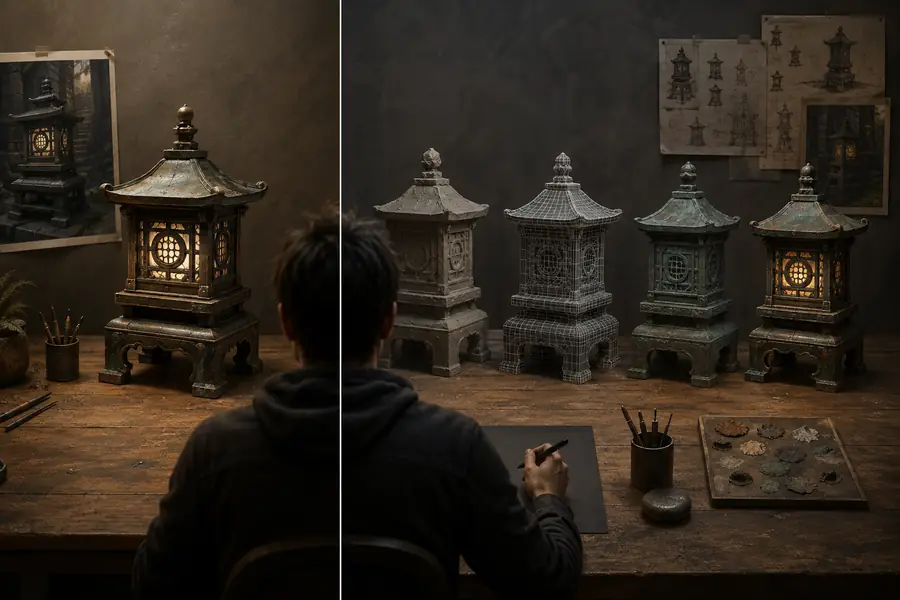
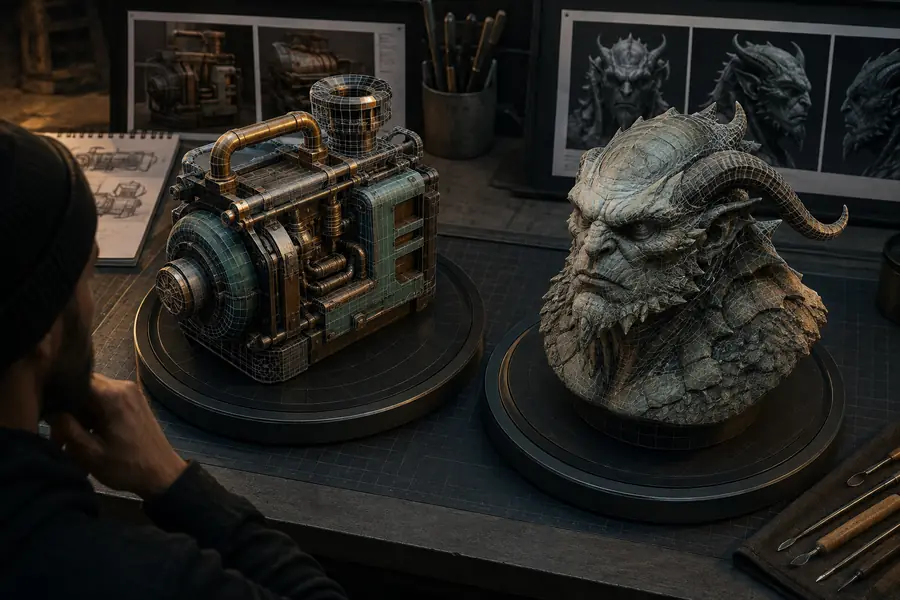
Side-by-side comparison of AI-generated 3D assets

Verdict first

The Verdict: Which Tool Wins?

Neither platform is best for every project. The better choice depends on whether you value an accessible all-in-one workspace or a focused model-generation pipeline.

Recommended

3D AI Studio

Best for creators who want a broad, approachable path from concept to editable 3D asset.

Pros

  • Supports a visual workflow that is easy to understand when starting from an image or idea.
  • Useful for exploring styles, objects, characters, and scenes in one creative environment.
  • Makes iteration feel closer to sketching and directing than technical asset setup.
  • A practical fit for students, independent creators, and small teams testing concepts quickly.

Cons

  • Generated geometry may still need cleanup before animation, manufacturing, or demanding game production.
  • Fine control over every mesh decision is limited compared with a manual modeling workflow.
  • Results can vary when the input image is unclear or contains hidden surfaces.

Meshy

Best for users who want a specialized AI asset generator with a recognizable production pipeline.

Pros

  • Strong fit for generating individual models from text or reference images.
  • Offers a focused workflow that can feel efficient for repeated asset experiments.
  • Useful when a creator already understands mesh cleanup, texturing, and downstream export needs.
  • A natural choice for users who prefer a dedicated generation tool rather than a broader studio surface.

Cons

  • The focused interface can require more context about topology, materials, and export preparation.
  • Generated results may still need retopology, UV work, or material adjustments for final use.
  • It can be less comfortable for beginners who want broader creative guidance around the asset.

Dimension by dimension

How the Two Platforms Differ

The table below focuses on decisions that affect the finished asset, not just the number of buttons or generation modes shown in a product tour.

3D AI Studio Meshy
1

Best starting point

3D AI Studio

Image, concept, or creative direction with room to explore.

Meshy

A text prompt or reference image aimed at one model.

2

Learning curve

3D AI Studio

Approachable for beginners who want visual experimentation.

Meshy

Straightforward for AI asset users, with more production context helpful.

3

Creative breadth

3D AI Studio

Broader studio-style workflow for trying multiple asset ideas.

Meshy

More focused on generating and refining individual 3D assets.

4

Iteration style

3D AI Studio

Encourages quick visual revisions and concept comparison.

Meshy

Encourages prompt and reference adjustments around a selected asset.

5

Mesh readiness

3D AI Studio

Good starting geometry, but inspect topology before serious production.

Meshy

Useful generated geometry, but cleanup and retopology may still be required.

6

Material direction

3D AI Studio

Suitable for exploring visual appearance alongside the model.

Meshy

Strong fit when texture and material generation are central to the task.

7

Beginner accessibility

3D AI Studio

Designed to keep the creative path understandable for first-time users.

Meshy

Accessible after learning the basics of model, texture, and export preparation.

8

Best downstream use

3D AI Studio

Concept development, prototypes, education, visual pitches, and asset exploration.

Meshy

Fast asset drafts for games, scenes, visualization, and reference-driven production.

9

Final quality control

3D AI Studio

Requires checking silhouette, scale, surfaces, and hidden geometry.

Meshy

Requires checking topology, UVs, textures, scale, and engine compatibility.

10

Who gets the most value

3D AI Studio

Creators who want one flexible place to explore and shape ideas.

Meshy

Users who already know what asset they need and want a specialized generator.

Choose with confidence

Who Should Choose Which Tool?

Start with the shape of your project. The right platform is the one that removes the most friction from your next decision, not the one with the longest feature list.

1

Choose 3D AI Studio when you are exploring an idea

Use it to move from a rough prompt, reference, or visual direction toward several plausible 3D concepts.

Its broader creative framing suits uncertain briefs, early concept work, classroom projects, and creators who want to compare directions before committing.

2

Choose Meshy when you need a focused asset generator

Use it when the object or character is already clearly defined and you want to test generations around a specific input.

A specialized pipeline can be efficient for repeatable model experiments, especially when you already understand how the asset will be cleaned and used.

3

Use both when the project has separate discovery and production stages

Explore the visual direction in 3D AI Studio, then test a focused generation or texture pass in Meshy when that adds value.

A hybrid route avoids forcing one tool to handle every stage and lets you judge each result by its actual downstream purpose.

Workflow example

From Rough Reference to Usable Asset

The difference between a compelling generation and a usable asset is usually the transition from visual idea to production checks.

Before: visual concept

Reference image and early AI-assisted 3D workflow
Cleaned quad-remeshed 3D axe ready for further use
After: checked and refined asset

Both platforms can accelerate the first generation, but neither removes the need to inspect scale, silhouette, topology, materials, and hidden surfaces before treating an asset as production-ready.

Know the tradeoffs

Honest Limitations to Plan For

AI generation is excellent for reducing blank-page time, but it is not a substitute for every modeling, design, or technical validation step.

Neither tool guarantees production-ready topology

A model can look convincing while containing uneven density, stretched polygons, internal geometry, or awkward edge flow.

WorkaroundUse the generated asset as a base, then inspect and retopologize it in a dedicated 3D package when deformation or optimization matters.

Hidden surfaces remain uncertain

Single-view references do not fully describe the back, underside, thickness, or functional connections of an object.

WorkaroundProvide multiple useful references when available and manually rebuild areas that affect fit, movement, or manufacturing.

Style consistency takes direction

A sequence of generations may drift in proportions, surface language, or material treatment even when the prompts are similar.

WorkaroundKeep a reference sheet, repeat important descriptors, and compare outputs against a fixed style target rather than choosing each result in isolation.

Exports still need a destination check

A file that opens correctly may not have the scale, polygon budget, UV layout, pivot, naming, or material setup required by your target app.

WorkaroundDefine the destination first and validate the asset in the intended engine, renderer, animation package, or slicer.

Key takeaways

The Comparison at a Glance

These figures summarize the practical decision rather than claiming a universal quality ranking.

Explore broadly or generate through a focused asset pipeline
2 paths
Useful comparison points before choosing a default tool
10 checks
Concept, generation, and cleanup remain distinct parts of the workflow
3 stages
Choose the route that gets your next usable asset finished faster
1 goal

Comparison FAQ

3D AI Studio vs Meshy FAQ

These answers address the questions creators most often ask before choosing between the two platforms.

3D AI Studio is positioned as a broader creative workspace for exploring ideas and developing assets, while Meshy is more focused on AI-assisted model and texture generation. The practical difference is whether you need open-ended creative direction or a specialized asset pipeline.

It can be the more comfortable starting point for beginners who want to experiment visually without first understanding every production term. Meshy can also be approachable, but new users may benefit from learning basic concepts such as topology, UVs, materials, and export targets.

Either can help with early game-asset exploration, but neither should be assumed to produce a final optimized asset automatically. Choose 3D AI Studio for broad concept iteration, or Meshy for focused model experiments, then validate polygon count, UVs, materials, scale, and engine compatibility.

Yes, if the exported asset and its references fit the receiving workflow. A sensible route is to use one platform for concept discovery and the other for a targeted generation or texture pass, followed by manual cleanup and destination testing.

No. Both tools can shorten ideation and produce useful starting points, but professional work still involves proportion control, topology, UVs, materials, optimization, rigging, and quality assurance. Their strongest role is accelerating decisions and reducing repetitive early-stage work.

Write down the asset's destination, required quality, input type, and deadline before generating anything. Pick 3D AI Studio when exploration and accessibility matter most, Meshy when a focused asset pipeline fits better, or test both on the same reference and keep the result that needs less correction.